Mold testing and inspection
How Mold Testing Works and What It Costs
This page is about the work itself: what a mold inspection includes, how mold testing is done, what different samples can show, and what published guides say the work tends to cost. It is written for Kansas City area homes and buildings, but it does not compete with the homepage title. The contractor who visits is independent. Mold Testing Kansas City only passes your request. We do not offer mold removal or remediation.
Mold inspection compared with mold testing
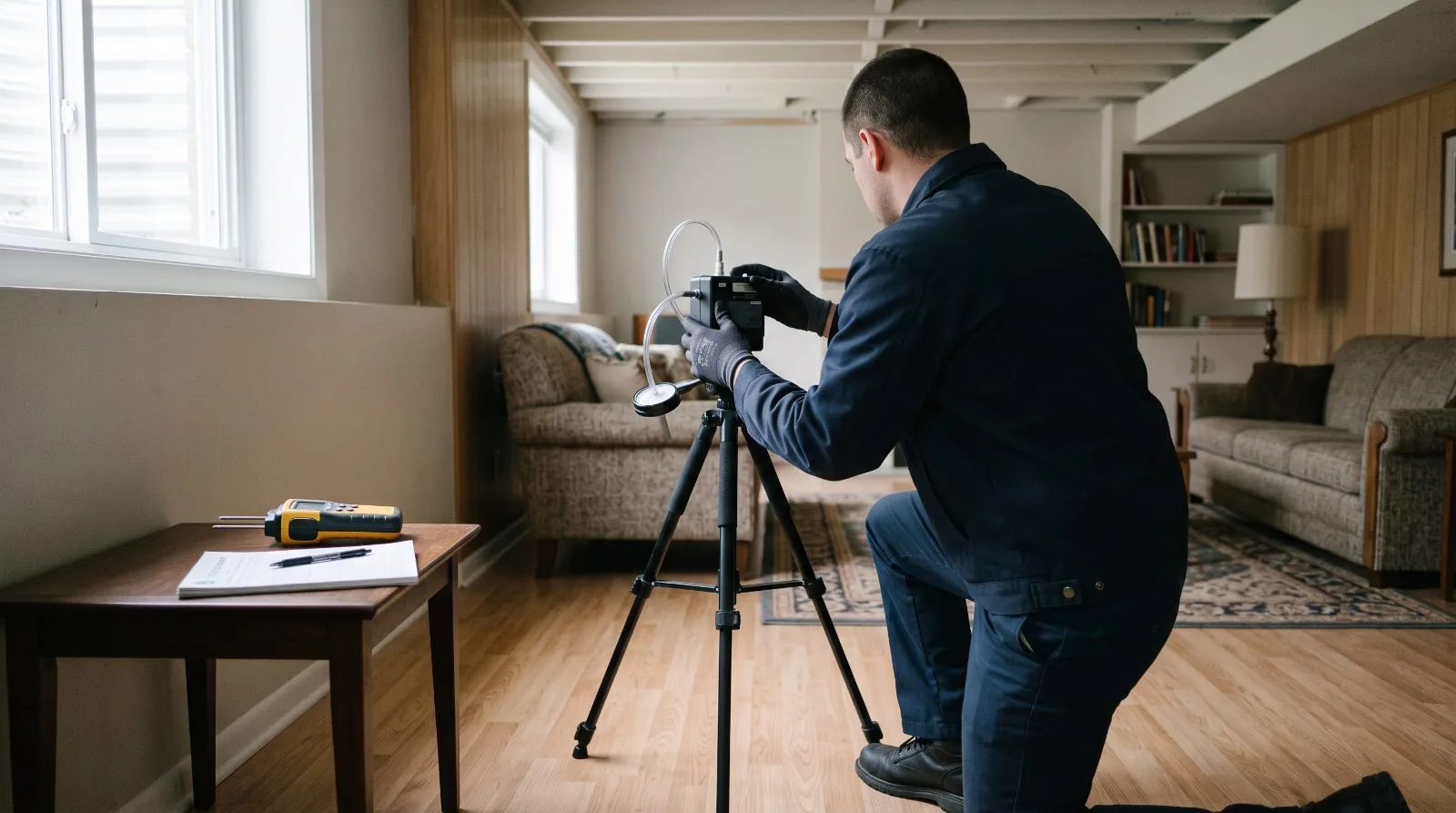
A mold inspection is the investigation of the building. The contractor looks for moisture and for signs of growth, takes readings, and documents what they find. Mold testing is the lab analysis of air, surface, dust, or cavity samples. Many visits include both. Some visits need only the inspection, especially when growth is already visible and the next step is drying and cleanup rather than a lab sheet. Missouri DHSS makes that last point clearly: sampling is often unnecessary when visible mold is present, and sampling is not a health-risk assessment.
If you searched for mold inspection near me or mold testing near me, the practical question is the same. Do you need someone to look at the house, document moisture, and, if it would help, collect samples for a lab? That is the service this site refers.
What happens during the visit
Plan on providing access to the rooms that concern you and to the basement, attic, and crawlspace if the house has them. If the contractor asks you to keep windows closed for a period before air sampling, follow that request. Avoid heavy cleaning, painting, or fogging right before the visit, because those steps can change what an air sample shows.
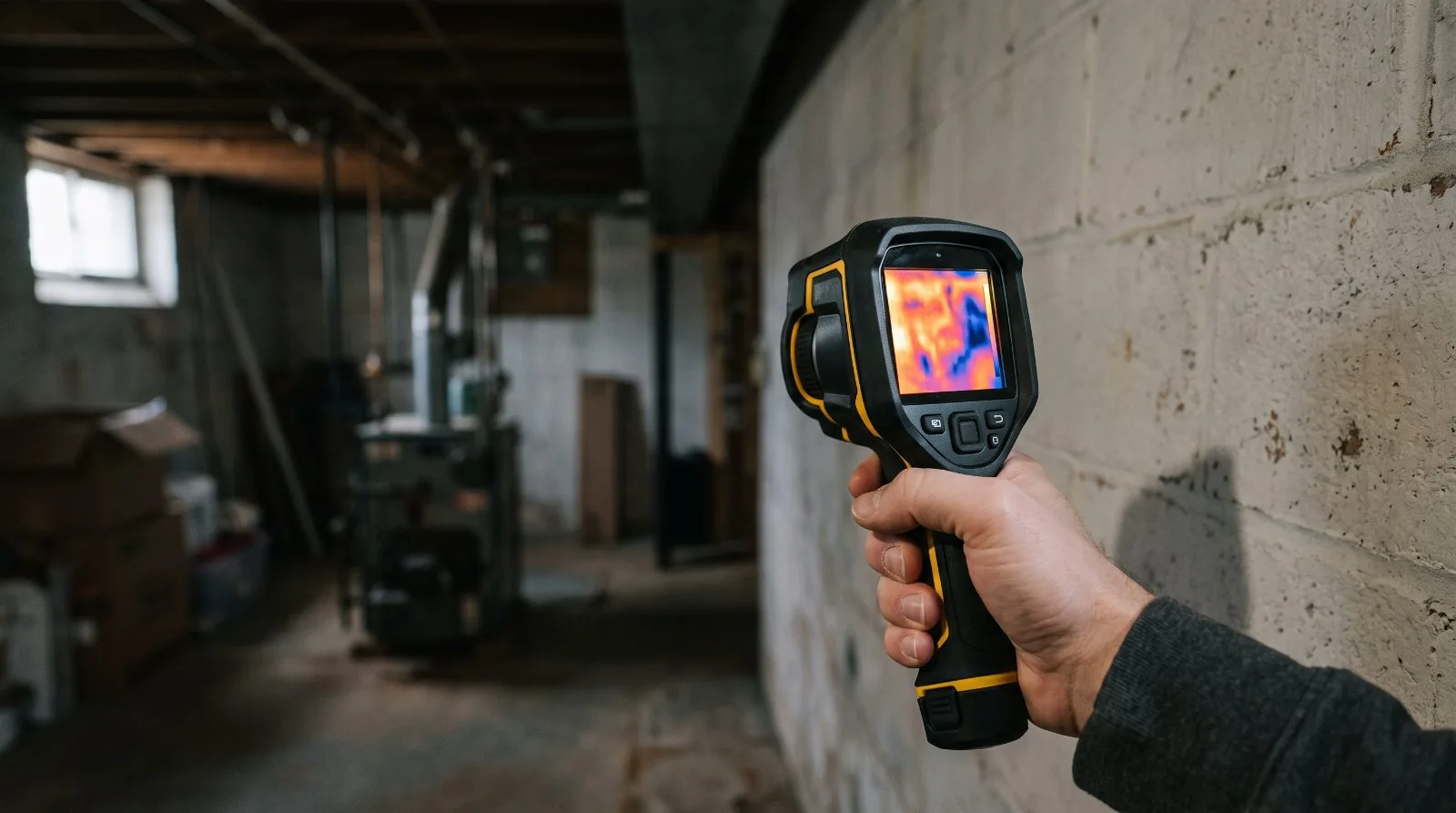
The walk-through should be systematic, not a glance at one corner. Bathrooms, laundry rooms, mechanical closets, exterior walls, and any area with a past leak deserve time. A thermal camera can highlight temperature differences. A moisture meter confirms whether material is wet. Photographs help you reread the report later.
If samples are recommended, you should hear why, how many, and what they cost before they are taken. Indoor air samples are typically compared with outdoor air. Surface samples are taken from a stain. Cavity samples require your approval for a small opening. ERMI dust testing, if you request it, follows the lab's collection method and is billed as a separate kind of analysis.
Air samples, surface samples, and ERMI
Air samples answer a question about the air at the time of the test. They are useful when the concern is a smell, a hidden source, or a comparison after cleanup. They are a snapshot, not a week-long history of the house.
Surface samples answer a question about a specific stain or patch, including stains people call black mold. The lab may identify a genus or, depending on the method, more detail. Color of the stain is not a species name.
ERMI testing looks at settled dust for a defined list of species using DNA analysis. It can be informative as a dust-based profile. It is not a government certificate, and it should not be sold as a single number that settles every question about a house. If a contractor offers ERMI, ask what the result will be used for and whether a moisture inspection is still included. An ERMI kit used without an inspection has the same limit as other at-home tests: you still may not know where water is coming from.
Air quality testing for mold is, in this trade, usually professional air sampling plus the inspection. If your concern is indoor air quality after a leak, say that in the request so the sampling plan can include the right rooms and an outdoor comparison.
Published cost ranges
We do not quote a price here because we do not perform the work. Published national figures in 2026 give a planning range. Angi and HomeAdvisor, using the same project data, report typical professional mold inspection costs from about $303 to $1,075, with an average near $689. Industry write-ups list visual and thermal moisture inspections around $250 to $450, small air-sample packages around $450 to $650, and extra cassettes often $75 to $125 each. Consumer guides also list individual air samples in a wider band, often $100 to $350 per test. Mycometrics lists its ERMI lab test at $285, and one industry guide lists ERMI analysis around $320 to $480 per sample, with professional collection extra. Your estimate may be lower or higher. The written estimate is the price that applies.
Ask the contractor to separate the inspection fee from lab fees so you can see what you are approving. Rush analysis, large houses, and formal reports for disputes usually cost more.
After the report
You should receive results you can reread, not only a phone summary. The contractor should explain the findings in ordinary language. If cleanup is needed, that work is separate. This site will not perform or package removal. You may later request a clearance test after someone else has finished cleanup. For official background, use the EPA, CDC, Missouri DHSS, and KDHE pages we also link from the homepage.
To request a visit, call 816-551-2746 or use the estimate form. Name your town and the rooms involved.