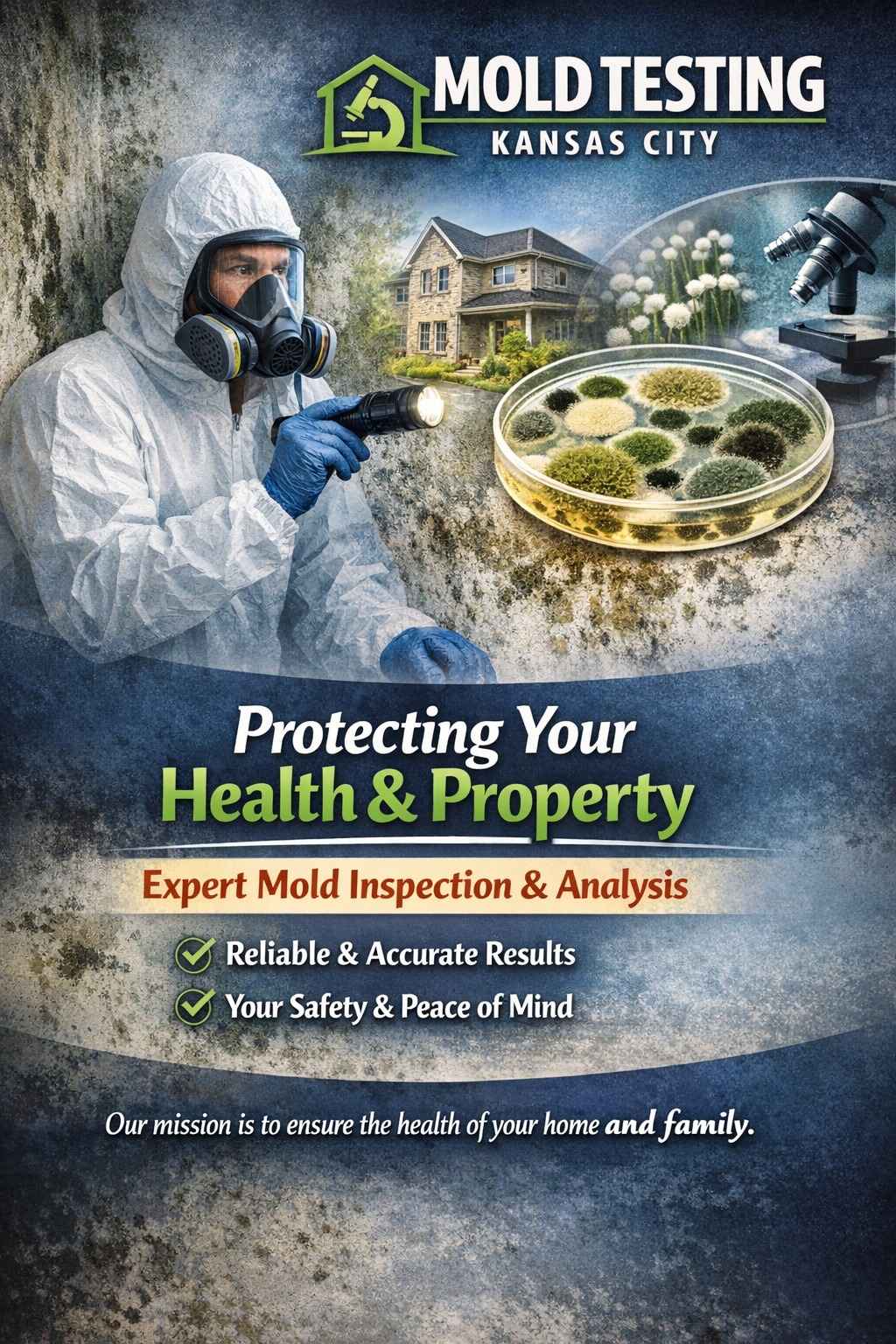
Kansas City’s Trusted Mold Inspection Experts
Mold Testing Kansas City, providing certified mold testing to protect your home or business with fast, accurate results and unparalleled reliability.
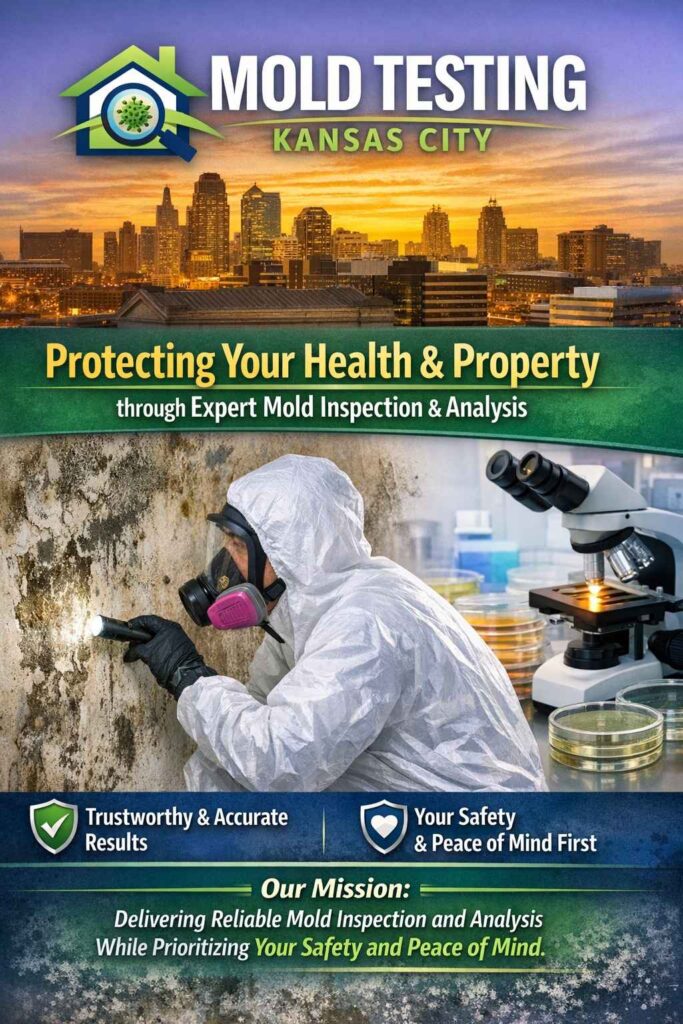
Certified Lab Testing for Precise Mold Identification
Explore our comprehensive mold inspection services, backed by quality and trust.
Mold Inspection
Thorough inspections to pinpoint mold issues and keep your property safe.
Air Quality Testing
Detailed air tests to ensure a healthy environment for your family or team.
Mold Analysis
Comprehensive analysis to provide accurate results you can rely on.
The team at Mold Testing Kansas City provided quick and thorough results, giving us peace of mind for our home.

William T.
Homeowner
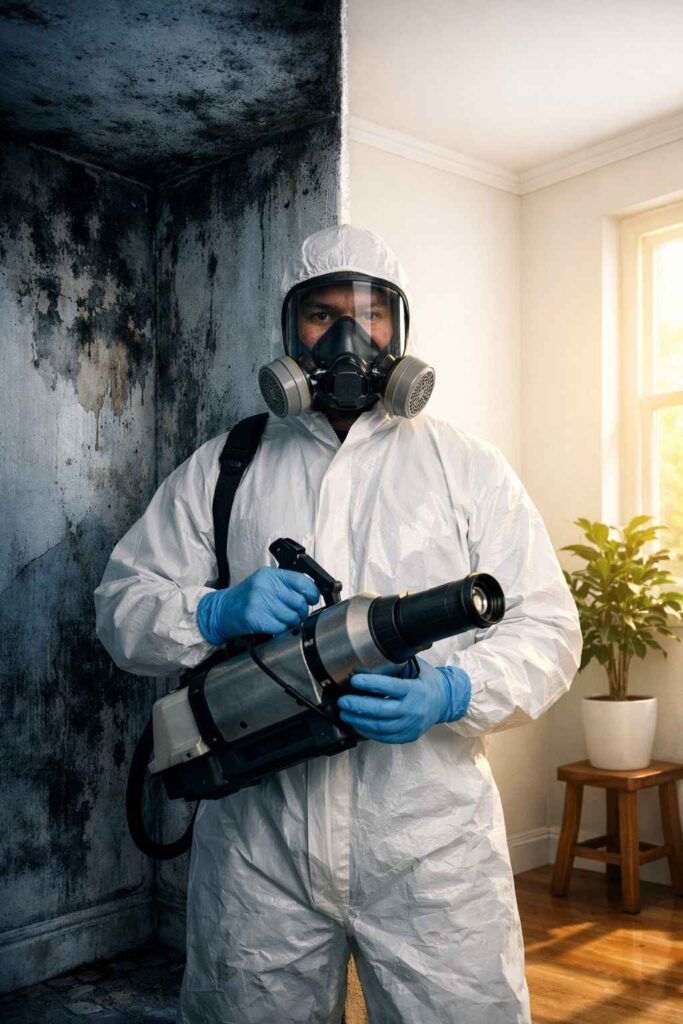
Healthy Living Starts with Expert Mold Testing
Mold Testing Kansas City We’re Trusted Professionals for Certified Mold Testing
Learn about our pricing plans designed to deliver affordable, reliable results for your home or business.
Certified Mold Testing for Residential and Commercial Spaces
Easily request a quote for expert mold testing services with clear guidance every step of the way.
Certified Lab Testing for Precise Mold Identification
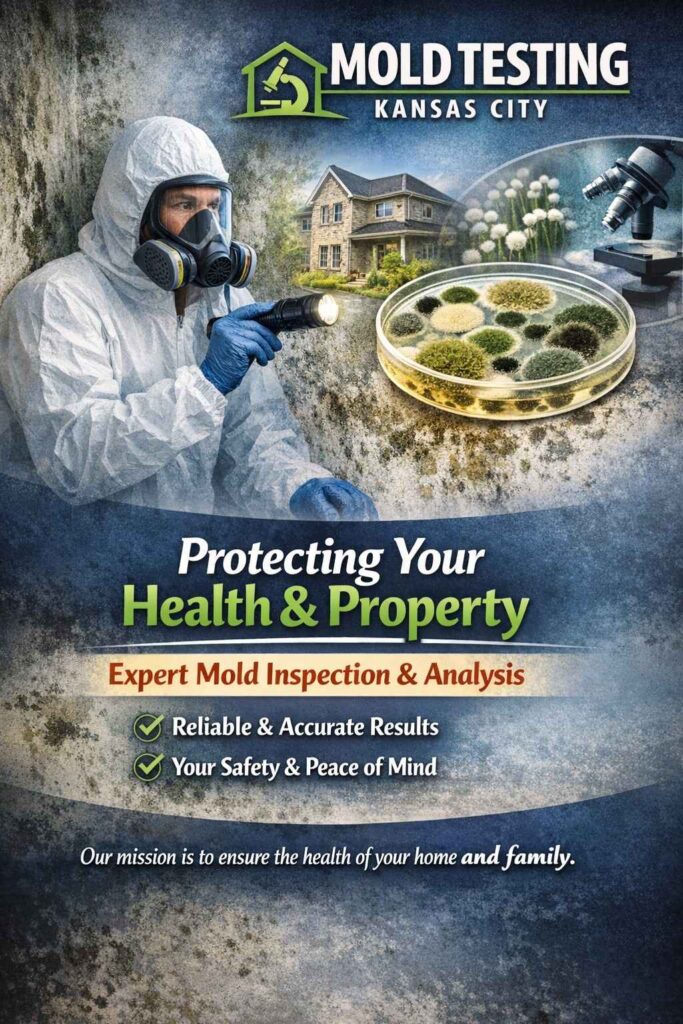
At Mold Testing Kansas City, we are dedicated to protecting your health and property through expert mold inspection and analysis. Our mission is to deliver trustworthy, accurate results while prioritizing your safety and peace of mind.
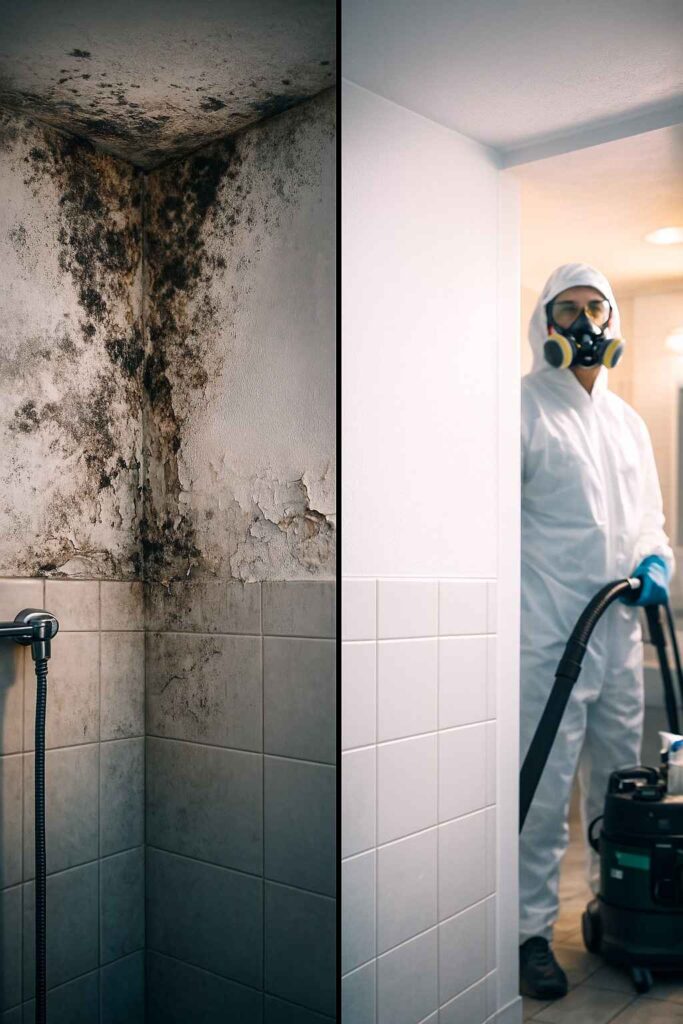
Certified Experts in Kansas City Mold Testing
188 Hood Avenue, Suite 101
325 Maple Street, Building 2
913-251-9296
info@moldtestingkc.com
Mold Testing Kansas City: Expert Inspection Services for Healthier Homes
When you suspect mold growth in your Kansas City home or business, professional mold testing kansas city services provide the accurate answers you need to protect your property and health. Whether you’re dealing with visible growth, musty odors, or recent water damage, understanding your indoor air quality through certified testing is the first critical step toward resolution.
Mold doesn’t discriminate, it affects homes throughout the Kansas City metro area, from historic neighborhoods in Westport to newer developments in Overland Park. The region’s humid summers and temperature fluctuations create ideal conditions for mold proliferation, making professional inspection services essential for property owners.
This comprehensive guide walks you through everything you need to know about mold inspection services, testing procedures, costs, and how to select the right certified professionals for your property.
Understanding Mold Testing and Why Kansas City Properties Need It
Mold spores exist everywhere, but they only become problematic when they find moisture and organic materials to colonize. Kansas City’s climate, with average humidity levels often exceeding 60% during summer months, creates perfect breeding grounds for mold growth.
Common mold triggers in Kansas City homes include:
- Basement moisture and flooding from Missouri River proximity
- Roof leaks during severe thunderstorms
- HVAC condensation issues
- Plumbing failures
- Poor ventilation in bathrooms and kitchens
- Foundation water intrusion
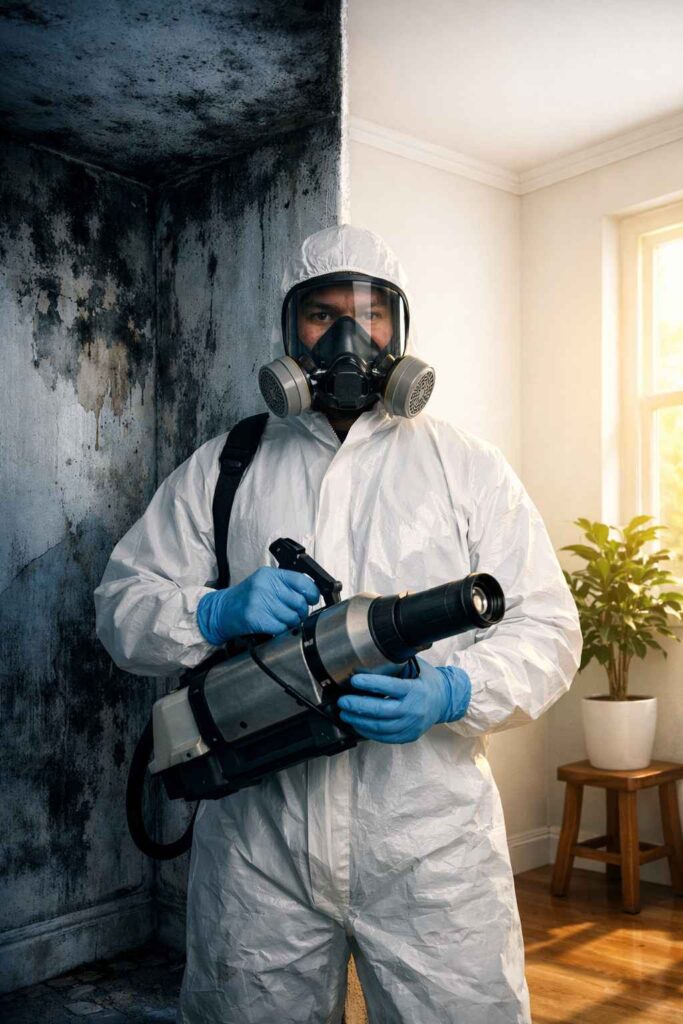
Professional mold testing Kansas City services identify not just visible growth but hidden contamination behind walls, under flooring, and within HVAC systems. A certified Kansas mold inspector uses specialized equipment and protocols that go far beyond what homeowners can detect with visual inspections alone.
What Professional Mold Inspection Kansas City Services Include
A comprehensive Kansas City Missouri mold inspection involves multiple assessment techniques that work together to provide complete property evaluation.
Visual Mold Inspection Process
Certified inspectors begin with thorough visual examinations of your property. The visual mold inspection process includes checking common problem areas:
- Basements and crawl spaces
- Attic spaces and roof structures
- Bathroom and kitchen areas
- Window frames and door seals
- HVAC systems and ductwork
- Areas with previous water damage
Inspectors use moisture meters, thermal imaging cameras, and borescopes to detect hidden moisture and potential mold growth behind surfaces without destructive investigation.
Air Quality Testing Methods
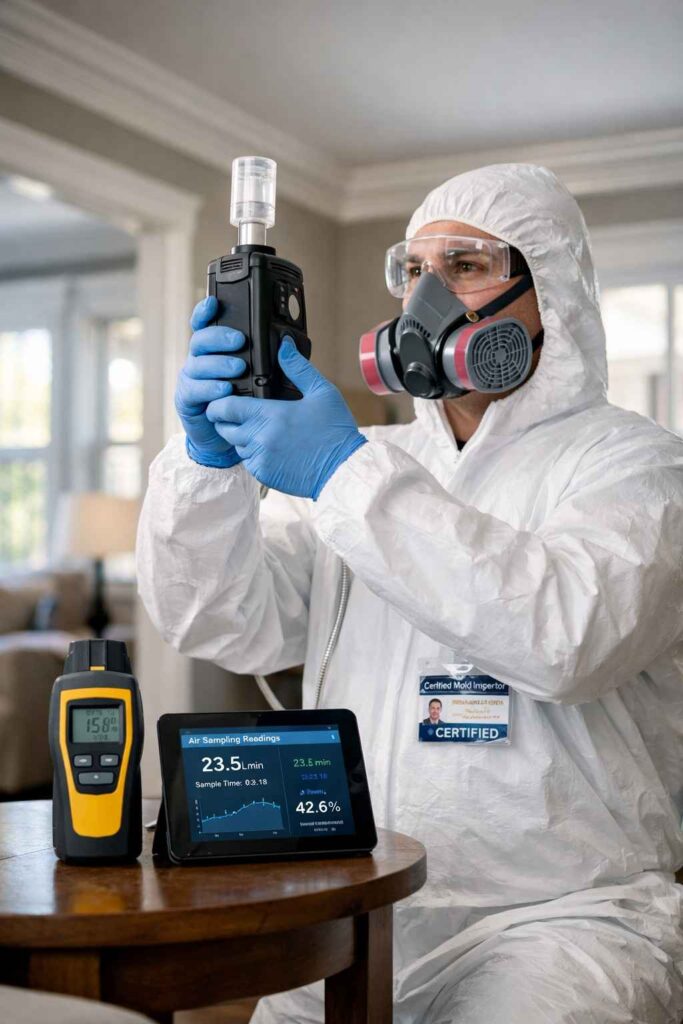
Indoor air quality testing represents the most comprehensive approach to mold detection. Air samples capture spore counts and identify specific mold species present in your environment.
Air sampling methods include:
- Spore trap sampling, Captures airborne mold spores on collection devices
- Viable sampling, Collects living spores that can be cultured in laboratories
- Particle counting, Measures total particulate matter in indoor air
Professional inspectors compare indoor air samples against outdoor baseline samples to determine if indoor mold levels exceed normal environmental concentrations.
Surface and In-Wall Sample Collection
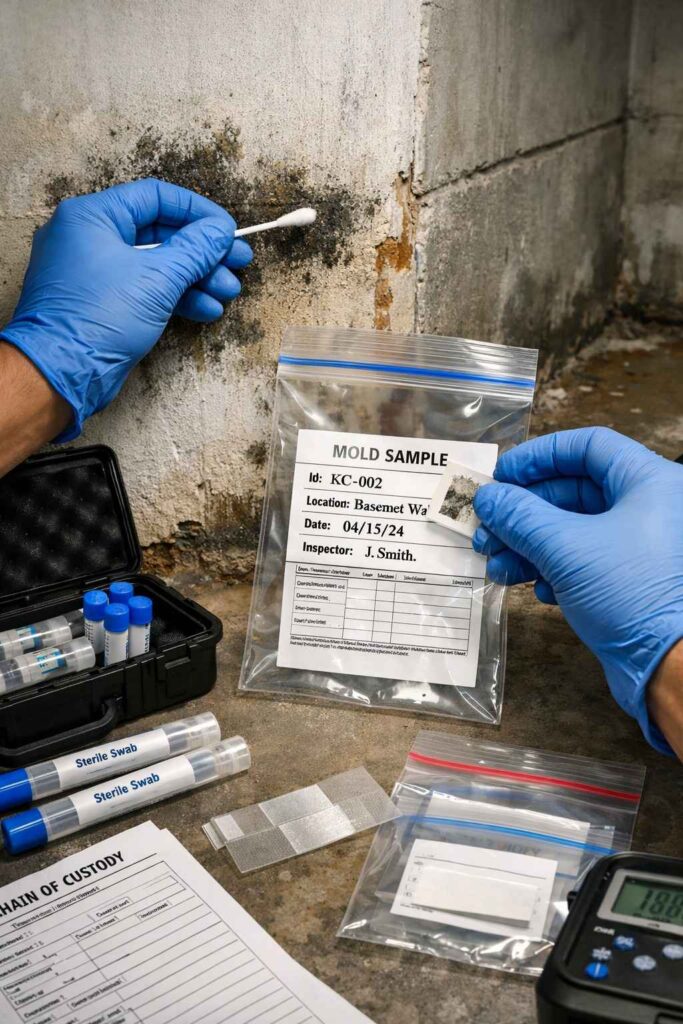
Surface mold sample collection involves swabbing or tape-lifting visible growth for laboratory identification. This helps determine the specific species present and whether toxic varieties like toxic black mold stachybotrys are contaminating your property.
In-wall mold sample collection becomes necessary when moisture readings or thermal imaging suggest hidden growth. Inspectors may drill small access holes to collect samples from wall cavities, providing definitive answers about concealed contamination without extensive demolition.
The Importance of Independent Mold Testing Services Kansas City
Many property owners don’t realize that some mold companies offer both testing and remediation, creating an inherent conflict of interest. When the same company that tests for mold also profits from remediation work, there’s financial incentive to report problems regardless of actual conditions.
Unbiased mold inspection services maintain independence by focusing exclusively on testing and consulting. This mold inspection without conflict of interest ensures you receive accurate, honest assessments based solely on scientific evidence.
Benefits of independent testing include:
- Objective, unbiased results
- No financial motivation to exaggerate problems
- Third-party verification for remediation companies
- Accurate baseline data for insurance claims
- Professional documentation for real estate transactions
A certified home inspector Kansas City with mold specialization provides the independent perspective you need for confident decision-making.
Mold Testing After Water Damage: Critical Timing
Kansas City experiences severe weather events regularly, from flash floods to basement seepage after heavy rains. Mold testing after water damage should occur within 24-48 hours of the incident to establish baseline conditions and again 3-5 days later to detect emerging growth.
Water damage creates the perfect environment for rapid mold colonization. Within 24 hours, mold spores begin germinating. Within 48-72 hours, visible growth may appear. Professional testing documents the extent of contamination and guides effective remediation strategies.
Understanding Kansas City Missouri Mold Testing Costs
Professional mold inspection costs in Kansas City vary based on property size, testing scope, and sample quantity. Understanding pricing structures helps you budget appropriately while avoiding unreliable discount services.
Typical Kansas City mold testing costs:
- Basic visual inspection: $200-$400
- Single-room air sample: $250-$400
- Comprehensive whole-home testing: $450-$800
- Post-remediation verification: $300-$500
- Laboratory analysis: $40-$150 per sample
Comprehensive testing provides the most valuable data. While more expensive upfront, thorough assessment prevents costly mistakes and ensures effective remediation planning.
Choosing Certified Professional Mold Inspection Kansas City Companies
Not all mold inspectors offer equal expertise. Selecting qualified professionals ensures accurate results and valuable guidance.
Look for these essential qualifications:
- Certification from recognized organizations (IICRC, ACAC, or MICRO)
- State licensure and insurance coverage
- Independent status (testing only, no remediation services)
- Advanced detection equipment ownership
- Laboratory partnerships for sample analysis
- Detailed written reporting protocols
Ask potential inspectors about their experience with Kansas City properties specifically. Local knowledge of regional construction methods, common moisture problems, and climate challenges provides valuable context for accurate assessments.
The Role of Independent Lab Mold Testing
After sample collection, materials go to accredited laboratories for analysis. Independent lab mold testing provides scientifically defensible results that identify specific mold species, spore concentrations, and potential health risks.
Laboratories use multiple identification methods including microscopy, culture techniques, and DNA analysis. Results typically return within 3-5 business days and include detailed reports identifying all detected species.
Post Mold Remediation Clearance Testing
After professional mold remediation companies complete their work, independent verification ensures successful treatment. Post mold remediation clearance testing confirms that:
- Mold levels have returned to normal environmental ranges
- No residual contamination remains
- Air quality meets acceptable standards
- Moisture sources have been properly addressed
The Kansas City mold remediation protocol requires clearance testing before reconstruction begins. This protects property owners from incomplete remediation and potential recurring problems.
Mold Inspection for Real Estate Transaction
Property transfers represent a critical time for mold assessment. Whether buying or selling, mold inspection for real estate transaction provides protection and negotiating power.
For buyers: Testing before closing reveals hidden problems that impact property value and safety. Results provide leverage for price negotiations or repair requirements.
For sellers: Proactive testing demonstrates transparency and can prevent deal failures during buyer inspections. Clean test results add value and buyer confidence.
Most Kansas City real estate contracts include mold inspection contingencies. Working with independent inspectors ensures unbiased results that all parties can trust.
Identifying Toxic Black Mold and Other Dangerous Species
While all mold requires attention, certain species pose greater health risks. Toxic black mold stachybotrys produces mycotoxins that cause severe respiratory problems, neurological symptoms, and immune system impacts.
Professional testing identifies specific species present, allowing appropriate response measures. Not all black-colored mold is stachybotrys, and not all dangerous molds appear black, proper laboratory identification prevents both under-reaction and unnecessary panic.
High-risk mold species commonly found in Kansas City:
- Stachybotrys chartarum (black mold)
- Aspergillus (various species)
- Penicillium
- Chaetomium
- Fusarium
Air Quality Testing Kansas City: Beyond Mold Detection
Comprehensive indoor air quality testing examines multiple contaminants beyond mold, including:
- Volatile organic compounds (VOCs)
- Carbon monoxide levels
- Humidity measurements
- Particulate matter
- Chemical off-gassing
This holistic approach provides complete understanding of your indoor environment, identifying all factors that might impact health and comfort.
Taking Action: Your Next Steps for Professional Testing
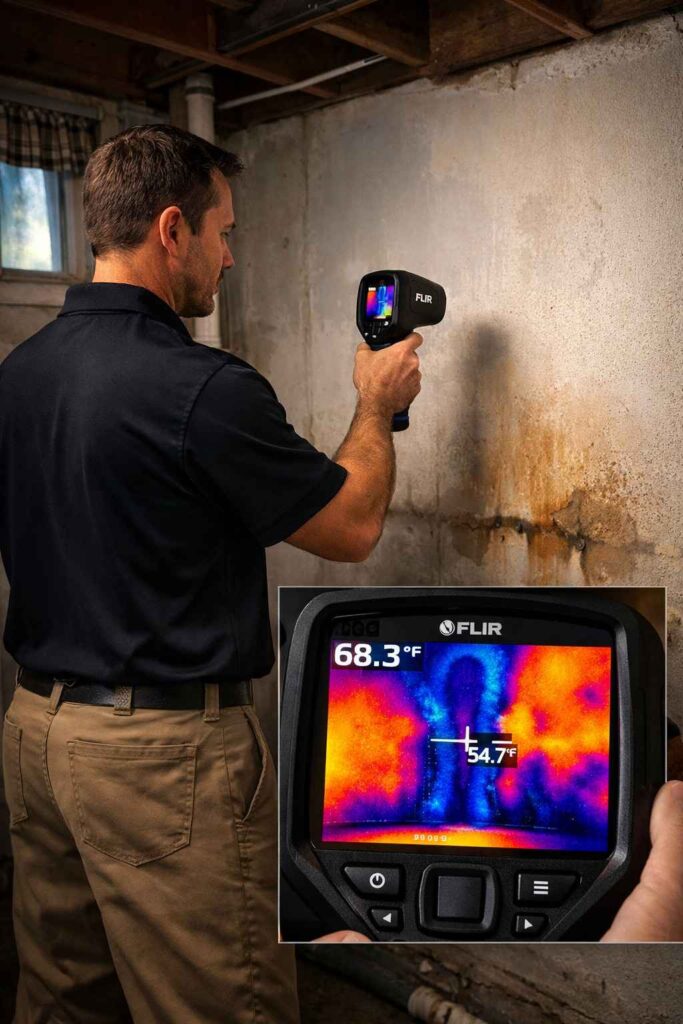
If you suspect mold problems, prompt action prevents escalation and minimizes health exposure.
Follow this systematic approach:
- Document symptoms and observations, Note musty odors, visible growth, water damage, or health symptoms
- Research certified inspectors, Verify credentials, independence, and local experience
- Schedule comprehensive testing, Request whole-property assessment with multiple sample types
- Review results carefully, Understand species identified, concentration levels, and recommendations
- Obtain multiple remediation quotes, Use test results to get accurate, comparable proposals
- Verify remediation completion, Require clearance testing before considering work complete
Don’t delay testing while problems worsen. Early detection almost always results in simpler, less expensive solutions.
Conclusion: Protecting Your Kansas City Property Through Professional Testing
Professional mold testing Kansas City services provide the accurate information you need to protect your property, health, and investment. Whether dealing with visible growth, investigating musty odors, or verifying remediation success, certified independent inspectors offer unbiased expertise that guides effective decision-making.
Kansas City’s climate challenges require vigilant property maintenance and prompt response to moisture problems. By partnering with qualified professionals who prioritize accuracy over profit, you ensure your indoor environment remains safe and healthy for years to come.
Don’t gamble with your property and health, invest in professional testing that delivers reliable answers and actionable solutions.
Frequently Asked Questions About Mold Testing Kansas City
Q: How much does professional mold testing cost in Kansas City?
A: Professional mold testing in Kansas City typically ranges from $200-$800 depending on property size and testing scope. Basic visual inspections start around $200-$400, while comprehensive testing with multiple air and surface samples costs $450-$800. Post-remediation clearance testing usually runs $300-$500.
Q: How long does mold testing take in Kansas City homes?
A: On-site mold inspection typically takes 2-4 hours for average-sized homes, depending on property size and complexity. Laboratory analysis requires an additional 3-5 business days. You’ll receive preliminary findings during the inspection with complete written reports following lab results.
Q: Can I test for mold myself or should I hire a professional?
A: While DIY test kits exist, professional mold testing provides significantly more accurate and actionable results. Certified inspectors use calibrated equipment, proper sampling protocols, and accredited laboratories that DIY kits cannot match. Professional testing is especially critical for health concerns, real estate transactions, or insurance claims.
Q: When should I get mold testing after water damage?
A: Schedule initial testing within 24-48 hours after water damage to establish baseline conditions. Follow-up testing should occur 3-5 days later to detect any emerging mold growth. Prompt testing documents damage extent and guides effective remediation before problems escalate.
Q: What’s the difference between mold inspection and mold testing?
A: Mold inspection involves visual examination of your property to identify visible growth, moisture sources, and risk areas. Mold testing includes collecting air and surface samples for laboratory analysis to identify specific species and spore concentrations. Comprehensive services include both inspection and testing for complete assessment.
